

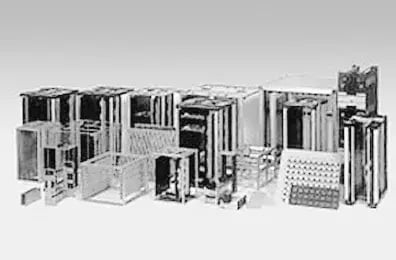

Effective esd control for plastics involves multiple strategies, such as ionization, humidification, and the strategic use of anti-static materials. This article provides a comprehensive yet easy-to-understand guide on why plastics are prone to static accumulation, the specific characteristics of various resin types, and how environmental factors like humidity and friction influence charge levels.
We will introduce practical, field-ready examples of static countermeasures that can be easily implemented on the factory floor. Furthermore, we summarize the tangible benefits of a robust ESD strategy—ranging from significant defect reduction and boosted production efficiency to enhanced workplace safety.
Root Causes of Static Electricity in Plastics
The primary cause of static electricity in plastics is that they are electrical insulators, meaning once they become charged, the electrical charge has nowhere to escape. When movements like "rubbing" (friction) or "peeling" (separation) occur, the balance of electrons is disrupted, resulting in static generation.

In actual manufacturing environments, triboelectric charging occurs in many processes, such as resin pellet transport, removing molded parts from machines, and contact with trays or PCB racks. In the case of electronic circuit boards and precision components, high-voltage discharges—often invisible to the naked eye—can damage components, leading to defects in later stages or appearing as latent defects.
Even in the EMS (Electronic Manufacturing Services) industry, where we have supported ESD control for many years, we frequently see cases where products appear perfect on the outside, yet suffer from high failure rates later. In most of these instances, plastic static electricity is the hidden culprit.
The Mechanism Behind Plastic Static Accumulation
Static electricity in plastics is primarily generated through contact charging (triboelectric charging). When two different materials come into contact and then separate, electrons are transferred, with one side naturally "receiving" electrons and the other "giving" them up.
The side that receives more electrons becomes negatively charged, while the side that loses electrons becomes positively charged. Under normal circumstances, this charge would dissipate over time through moisture in the air or surrounding conductors. However, because plastics are highly insulative, they have extremely few "escape routes," allowing the charged state to persist for a long time.
In molding and assembly plants, actions such as:
- Moving along a conveyor belt
- Sliding down a chute
- Removing products from a tray
are repeated constantly. Each of these actions is a cycle of "contact" and "separation," causing electrostatic charging and discharging every time.
In environments handling electronic devices, even if a spark is not visible, discharges of several hundred to several thousand volts can damage the internal structures of ICs and transistors. Especially for high-value boards used in automotive electronics, a single discharge can lead to massive failure costs. This makes understanding the mechanism of plastic static essential for effective ESD control.

Static Charging Tendencies by Resin Type (PE, PP, PC, etc.)
Although we group them as "plastics," the tendency to charge varies significantly by material. Generally, commodity resins like Polyethylene (PE), Polypropylene (PP), and Polystyrene (PS) are highly insulative and well-known for accumulating static easily. On the other hand, conductive grades or materials with anti-static treatments are designed to allow charges to dissipate slowly, thereby suppressing accumulation.
Below is a brief summary of charging tendencies for representative resins:
| Resin Type | Common Applications | Charging Tendency | Typical Volume Resistivity | ESD Control Tips |
|---|---|---|---|---|
| Polyethylene (PE) | Films, packaging, containers | Very high | 10¹⁴–10¹⁶ Ω・cm | Use of anti-static agents or films is effective. |
| Polypropylene (PP) | Trays, containers, auto parts | High | 10¹⁴–10¹⁶ Ω・cm | Switching to ESD-safe trays or conductive grades is effective. |
| Polystyrene (PS) | Electronic part trays, packing materials | Very high | 10¹⁴–10¹⁶ Ω・cm | Permanent anti-static agents or grades are effective. |
| Polycarbonate (PC) | Covers, protective plates, cases | Moderate to High | 10¹³–10¹⁵ Ω・cm | Suppress static via anti-static coatings or conductive fillers. |
As shown, many general-purpose resins have an extremely high volume resistivity of 10¹³ to 10¹⁶ Ω・cm, making it difficult for charges to escape. Using these resins as-is for racks or trays that store circuit boards can inadvertently charge the products or increase the risk of discharge.
Therefore, in workplaces where ESD control is required, it is crucial to reduce the charging risk at the material level by adopting ESD racks, ESD trays, and ESD carts made from conductive plastic resins or anti-static grades.
The Relationship Between Humidity, Friction, and Static Levels
Static levels in plastics depend not only on the type of material but also on environmental conditions (humidity) and movement (friction/contact frequency). The reason static is more common in winter is due to dry air, a principle that applies directly to factory production lines as well.
In low-humidity environments, there is almost no moisture in the air or on surfaces, leaving few paths for electrical charges to escape. Consequently, the plastic surface remains charged, making electrostatic discharge (ESD) more likely to occur with even minimal contact or movement.
Conversely, when humidity is at an appropriate level, a microscopic layer of moisture forms on surfaces, allowing static to dissipate slowly. For this reason, facilities requiring strict ESD control often target a relative humidity of 40% to 60% using humidifiers or HVAC systems.
Furthermore, even with the same resin, conditions such as:
- High-speed transport
- Sliding down long chutes
- Repeated contact with conveyors or trays
will increase contact frequency and friction energy, leading to higher charge levels. In other words, not just "what material you use," but also "how you move it" and "in what environment" determines the severity of static generation.
Critical Problems Caused by Static Electricity in Plastics
The true danger of plastic static electricity lies in its invisible but wide-ranging impact, including contamination, visual defects, decreased yield, and uncomfortable shocks to workers, affecting everything from product quality to safety. Especially with electronic circuit boards and precision parts, static-related issues lead directly to scrap costs and customer claims, making proactive measures essential.
In our 40+ years of providing ESD control products, we often hear: "Defects increased suddenly even though we haven't changed the equipment or materials." In many of these cases, static is the culprit. Defects frequently surface during dry seasons, after updating plastic trays, or when changing line speeds.
Mechanism of Contamination and Visual Defects
The most visible issue caused by plastic static is contamination and visual defects. Charged plastic trays or covers act as magnets, strongly attracting fine dust, fibers, resin powder, and solder balls from the surrounding environment.
An attractive force known as "Coulombic force" acts between the charged surface and the debris, making it difficult to remove once attached. This leads to problems such as:
- Dust sticking to molded parts, appearing as scratches or stains.
- Fine debris remaining on circuit boards, causing unevenness in painting or coating.
- Visual defects in optical components or transparent covers that impair visibility.
In EMS environments handling circuit boards, debris attracted by static can get trapped during subsequent soldering or coating processes, leading to latent defects. Even if there are no problems at the time of inspection, these issues may surface over time or with temperature changes, increasing the risk of field claims and recalls.
Relying solely on air blowing or cleaning has its limits. The most effective long-term solution for ESD control is to switch plastic trays and covers to ESD-safe grades, suppressing the charge itself and creating an environment that does not attract debris.
Impact on Production Yield and Quality Control Issues
While individual static-related issues may seem minor, their accumulation results in lower yield and increased quality costs. For high-value electronic boards, such as those used in automotive electronics, a single defect can lead to significant scrap costs.
Typical quality issues caused by static are summarized below:
| Trouble Type | Main Cause (Static) | Impact on Production Line | Impact on Costs | Effective Solution Direction |
|---|---|---|---|---|
| Visual Defects / Contamination | Dust/debris attraction to charged surfaces | Increased rejections during inspection | Increased labor for re-inspection/cleaning | Adopt ESD trays and anti-static covers |
| ESD Damage to Boards/Parts | Discharge from charged plastics | Sudden failures or malfunctions after assembly | Disposal and re-manufacturing of expensive boards | Introduce conductive racks, carts, and IC trays |
| Latent Defects / Field Claims | Accumulation of minor ESD damage | Issues surfacing after the product has shipped | Warranty costs and loss of brand reputation | Line-wide ESD control and traceability management |
| Reduced Operational Efficiency | Frequent cleaning and manual rework | Disrupted tact time and increased overtime | Increased labor and indirect costs | Update to tools/fixtures that suppress static generation |
In this way, static issues are not just about "the number of defects rejected at inspection." They are factors that drive up hidden costs, such as re-inspection, rework, re-manufacturing, and market response. Especially for high-density boards with delicate ICs and transistors, even minor ESD can cause internal damage that accumulates, leading to future failures.
Facilities that have introduced ESD control products—such as ESD circuit board racks and ESD carts made from the conductive plastic material NIXAM—often report that "defect rates due to static dropped, and scrap costs were reliably reduced." Because static increases "hidden costs," early intervention leads to high-ROI improvements.
How Static Electricity Affects the Work Environment
Plastic static affects more than just products; it impacts the work environment and the safety and comfort of operators. Typical examples include:
- Unpleasant "shocks" when workers touch equipment or trays.
- Dust accumulation on charged carts and trolleys, increasing the cleaning workload.
- Increased ignition risk from spark discharges in areas handling dust or solvents.
In environments where workers frequently receive static shocks, it can lead to reduced concentration and slower work speeds, potentially increasing human error. Furthermore, in dust-prone environments, it becomes difficult to maintain the cleanliness required for certain processes, increasing the time and cost for maintenance.
Factories with advanced ESD control combine several measures to lower the static level of the entire environment, such as:
- Switching floors, carts, racks, and trays to conductive specifications.
- Using wrist straps, conductive shoes, and conductive sheets to direct charges from workers and equipment to ground.
- Using anti-static curtains or partitions to isolate processes from dust and static.
As a result, workplaces with better static management see fewer unpleasant shocks, cleaner equipment, and reduced stress for operators. Improved safety and comfort have a positive long-term impact on employee retention and productivity.
Effective Strategies for Plastic ESD Control
Approaches to managing static in plastics can be broadly categorized into three types: "Elimination (Ionization)," "Environmental Control (Humidification)," and "Suppression (Anti-static Materials)." The best method depends on whether you are looking for immediate results or a permanent, long-term solution.
【Main ESD Control Measures for Plastics】
- Ionization (Elimination): Neutralizing and removing accumulated charges using ionizers or air blows.
- Humidification (Environmental): Maintaining 40–60% humidity to encourage natural discharge through airborne moisture.
- Grounding (Earthing): Grounding equipment and operators to ensure a safe path for electricity to escape.
- Anti-static Materials (Suppression): Switching to materials that do not accumulate static, such as conductive plastics or those treated with anti-static agents.
It is crucial to consider these as a combined strategy of "Environmental Measures + Material Measures + Tool/Fixture Measures." By balancing humidity and grounding while utilizing anti-static plastics and ESD control products, you can comprehensively reduce contamination, ESD damage, and unpleasant shocks.
Foundational ESD Control: Ionization and Humidification
Managing static electricity involves two main goals: "Elimination (Ionization)" to remove existing charges and "Suppression (Prevention)" to stop charges from building up. To achieve effective esd control, it is important to implement measures based on these specific objectives.
Static "Elimination": Ionizers, Neutralizing Brushes, Grounding
A method to instantly neutralize and remove static that has already generated. This is effective for "resetting" charges just before inspection or packaging processes.
Static "Suppression": Humidification, Anti-static Agents, Conductive Materials
A preventive approach to create an environment and use materials where static is less likely to occur. This is essential for stabilizing quality across the entire production line.
The first step is to build a foundation by combining these measures. Below is a summary of the typical directions for these countermeasures:
| Measure Type | Main Methods | Expected Effects | Suitable Processes | Implementation Points |
|---|---|---|---|---|
| Ionization | Ionizers / Air blows | Neutralizes charges and lowers potential | Inspection, Assembly, Packaging | Managing airflow, distance, and maintenance frequency is key. |
| Humidification | Humidity control via HVAC | Lowers surface resistance to let charges escape | General factory areas (dry seasons) | Requires zoning to prevent condensation and mold. |
| Grounding | Grounding equipment, jigs, and floors | Ensures an escape route for charges | All ESD-managed areas | Regular continuity checks and records are effective. |
| Operator Measures | Wrist straps, conductive shoes/mats | Suppresses human body charging and discharge | Handling PCBs and ICs | Proper wear rules and education are mandatory. |
Ionization devices work by blowing positive and negative ions onto the surface of charged plastic trays or workpieces to neutralize their electrical potential. Installing ionizers just before inspection or camera imaging stages is a common way to suppress contamination and prevent image judgment errors.
Humidification aims to maintain a relative humidity of around 40–60%. This forms a microscopic layer of moisture on surfaces, creating more paths for charges to slowly dissipate. If humidifying the entire factory is difficult, zoning and focusing on specific high-priority ESD control areas is also an effective strategy.
Additionally, grounding equipment, fixtures, and ESD carts allows charged energy to escape safely. For stable esd control, it is essential to periodically use continuity checkers to ensure that "conductive floors + conductive wheels + grounding points" are functioning correctly.
Utilizing Anti-static Plastics and Agents
In addition to basic measures, making the material itself less prone to charging is a major pillar of plastic static prevention. This is where anti-static plastics and anti-static agents play a vital role.
Anti-static plastics are generally classified into the following types:
- Conductive grades (formulated with conductive fillers like carbon)
- Dissipative grades (kneaded with anti-static agents)
- Surface-treated types (coatings or surface agents)
All of these function by ensuring a path for charges to escape slowly through or across the material, preventing the accumulation of static.
For example, using PCB racks or trays made from ESD-compliant resins like the conductive plastic material "NIXAM" can drastically reduce the risk of charging and discharging compared to conventional general-purpose PP trays. In fields like automotive electronics where high-density, expensive boards are common, customers often find that "simply changing the tray lowered the defect rate and scrap costs noticeably."
Regarding anti-static agents, there are different types to choose from based on the application and required durability:
- "Internal type" mixed into the resin.
- "Surface type" coated onto the molded part.
- "Permanent anti-static type" designed for long-term effectiveness.
Utilizing anti-static plastics or agents is particularly effective in the following scenarios:
- Trays and racks for storing PCBs and ICs.
- ESD carts used for transporting parts between processes.
- Covers, fixtures, and partitions where contamination is a concern.
- Labels and tags used for traceability management.
By using ESD-compliant labels, such as ESD traceability labels, you can prevent the risk of introducing a charge to the board via the label itself while maintaining accurate manufacturing records and lot management.
How to Select and Implement ESD Control Products
With so many types of products available, it’s common to feel overwhelmed. The key is to prioritize implementation based on your site's specific bottlenecks.
Here are the basic steps for selecting esd control products:
| Step | Considerations | Examples | Checkpoints | Related Products |
|---|---|---|---|---|
| 1. Assessment | Where, when, and what kind of defects occur? | Visual defects, ESD damage, contamination | Any seasonal or process-specific bias? | ESD meters and simple checkers |
| 2. Root Cause Analysis | Is the cause in the environment, material, or fixture? | Worsens only when dry; occurs only with specific trays | Check material/resistance of plastic fixtures | Conductive plastic resin materials |
| 3. Strategy Decision | Environmental measures, material measures, or both? | Humidification + switching to ESD racks | Balance between investment and effect | ESD carts, ESD PCB racks |
| 4. Trial & Evaluation | Testing on a partial line | Compare over 1 lot to several months | Changes in defect rates, rework time, and scrap costs | ESD traceability labels, etc. |
Especially for lines handling many PCBs and ICs, looking at products from the following perspectives will make the results clearer:
- ESD Carts: Can they carry boards and trays safely while suppressing charge/discharge risks during transport?
- ESD PCB Racks: Is the structure stable enough for high-density boards, and is it compatible with the mounting process?
- Conductive Plastic Materials (NIXAM, etc.): Do they meet the required resistance while satisfying mechanical strength and heat resistance?
- ESD Traceability Labels: Do the labels themselves avoid bringing in static while ensuring readability and durability?
When implementing products, we recommend going beyond catalog specs and performing on-site testing and sample evaluations to check usability and maintainability. Especially for customers with high quality requirements, such as automotive electronics manufacturers, having a line with thorough esd control is becoming a key factor in selecting business partners.
Key Benefits of Implementing Proper ESD Control
The purpose of implementing esd control for plastics goes beyond simply "reducing static." In reality, it yields effects that touch the very core of factory operations, including reducing defects, boosting production efficiency, creating a safe and comfortable work environment, and achieving long-term cost reductions. These benefits are particularly significant in sectors with high quality requirements, such as electronic circuit boards and automotive electronics.
Reducing Defects and Boosting Production Efficiency
When plastic static is properly suppressed, the most visible change is the defect rate. By reducing contamination, visual defects, and ESD damage caused by charged trays or covers, rejections during inspection and rework are significantly decreased.
Especially in facilities handling expensive automotive electronics boards or delicate ICs/transistors, there are many cases where implementing ESD control products (such as ESD PCB racks, ESD carts, and NIXAM conductive plastic materials) has reliably reduced the scrap cost per unit.
When defects are reduced, the production line experiences the following positive changes:
| Item | Before ESD Control | After ESD Control | Impact on Production Efficiency | Impact on Quality |
|---|---|---|---|---|
| Inspection Rejects | Frequent contamination and visual defects | Significant decrease in defects | Reduced rejections and re-inspections | Stable visual quality |
| ESD-related Defects | Sporadic board failures of unknown cause | Notable decrease in ESD-caused defects | Re-mounting and re-manufacturing become unnecessary | Improved reliability of electronic components |
| Tact Time | Tact time often disrupted by rework/cleaning | Stable flow according to planned tact time | Production according to plan becomes possible | Improved accuracy of production planning |
| Scrap Costs | High disposal costs for defective boards | Reduced disposal and rework expenses | Boosting profit margins | Contribution to stable supply for customers |
In this way, effective esd control creates a positive cycle: "Reduce defects" → "Reduce rework" → "Minimize line stoppages" → "Boost production efficiency." As a result, you can establish a system that stably ships more high-quality products, even with limited personnel and equipment.
Enhancing Workplace Safety through Environmental Improvement
Implementing esd control for plastics also has the critical aspect of improving the work environment and safety. Simply reducing the "zap" or shock when touching charged trays, carts, or equipment significantly alleviates worker stress.
Furthermore, since static electricity attracts dust and particles, an environment with insufficient measures leads to dirty equipment and floors, increasing the cleaning workload. Conversely, introducing ESD carts, conductive plastic racks, and anti-static covers creates an environment that is dust-resistant and easy to clean.
In areas handling dust, solvents, or gases, it has also been noted that electrostatic discharge can occasionally act as an ignition source. Ensuring thorough use of conductive plastics and grounding in these areas is extremely important from the perspective of regulatory compliance and risk management.
In factories with advanced ESD management, the following feedback is common:
- Fewer static shocks led to fewer complaints from workers.
- Equipment and carts don't get covered in dust, making it easier to maintain cleanliness.
- ESD rules became clear, simplifying training for new employees.
In this way, esd control functions as not only a measure for "quality" but also as an initiative for "building a worker-friendly factory."
Achieving Long-term Quality Stability and Cost Reduction
The true value of esd control for plastics lies in long-term quality stability and total cost reduction. While the "initial cost of ESD control products" may be noticeable in the short term, over a span of several years, the savings from reduced scrap, rework, labor, and claim handling costs almost always outweigh the investment.
Especially in automotive-related supply chains, such as car electronics, ESD control is becoming a standard requirement. As the demand for high-density electronic boards—which are vulnerable to static—continues to grow, incorporating ESD management as a "default system" from an early stage provides a major advantage for the future.
From a long-term perspective, static countermeasures offer the following benefits:
| Item | Before ESD Control | After ESD Control | Impact on Production Efficiency | Impact on Quality |
|---|---|---|---|---|
| Inspection Rejects | Frequent contamination and visual defects | Significant decrease in defects | Reduced rejections and re-inspections | Stable visual quality |
| ESD-related Defects | Sporadic board failures of unknown cause | Notable decrease in ESD-caused defects | Re-mounting and re-manufacturing become unnecessary | Improved reliability of electronic components |
| Tact Time | Tact time often disrupted by rework/cleaning | Stable flow according to planned tact time | Production according to plan becomes possible | Improved accuracy of production planning |
| Scrap Costs | High disposal costs for defective boards | Reduced disposal and rework expenses | Boosting profit margins | Contribution to stable supply for customers |
In a world where electronic devices become more sophisticated every day, the importance of static control will only increase. By utilizing ESD carts, NIXAM conductive plastic materials, ESD PCB racks, and ESD traceability labels—shifting toward a "static-aware line design"—you can build a production system that is highly competitive in terms of both quality and cost.
FAQ: Plastic Static Electricity and ESD Control
Why are plastics more prone to static compared to metals?
This is because plastics possess the property of being "electrical insulators." In conductive materials like metal, any generated electricity quickly flows across the surface and escapes. However, plastics have an extremely high volume resistivity of 1014 to 10 Ω・cm or more. This causes the electricity to remain trapped in place, resulting in a prolonged state of static charge.
How can I remove accumulated static electricity immediately?
The easiest ways are to introduce "moisture (humidity)" or use "static removal tools." You can create a path for electricity to escape into the air by lightly misting the area or using a humidifier. Additionally, touching grounded (earthed) metal to lower the electrical potential, or using commercially available anti-static sprays and cloths, is effective. In industrial settings like factories, the most effective method is using an ionizer to blow positive and negative ions onto the surface to achieve electrical neutralization.
What is the difference between "anti-static plastic" and regular plastic?
The difference lies in whether "electrically dissipative components" are kneaded into the material or applied to the surface. While regular plastic is an insulator, anti-static grade materials are designed so that charges do not accumulate even when friction occurs. This is achieved by using additives that create a microscopic layer of moisture on the surface or by mixing in conductive fillers, such as carbon, to create an internal path for electricity to escape.
Can static electricity from plastics truly damage electronic components?
Yes, it happens frequently. Invisible "thousands of volts" of static electricity can destroy electronic components. While a person typically only feels a "zap" at discharges of approximately 3,000V or higher, modern ICs and transistors can have their internal circuits scorched by an electrostatic discharge (ESD) of only a few dozen to a few hundred volts. "Latent defects," where the component doesn't fail immediately but sustains hidden damage, are particularly dangerous as they lead to sudden failures after the product has shipped.